
What You’ll Find This Week
HELLO {{ FNAME | INNOVATOR }}!
Innovation doctrine has one commandment above all others: be first. Get there before anyone else, claim the market, and make your competitors chase you.
I've spent a lot of time in this newsletter covering why that imperative is harder than it sounds. The innovation debt that accumulates when companies move too fast. The disruption playbook that saves the company and then kills it. The efficiency trap that catches up with even the most ambitious organizations. The pressure to be first creates most of those problems.
This week's article is about what happens when you flip the premise. Being second isn't a failure mode. In most markets, and especially in AI, it's increasingly the smarter bet. The research to back that up has been sitting there for thirty years. AI just made it impossible to ignore.
Here’s what you’ll find:
This Week’s Article: First to Market. First to Lose.
Don’t Miss Our Latest Podcast
This Week’s Article

First to Market. First to Lose.
The first-mover advantage is one of the most durable ideas in business strategy. Get there before anyone else, claim the market, and make your competitors chase you. It's the belief that turned "move fast and break things" into Silicon Valley gospel and the unofficial operating manual for a generation of startups.
But even Mark Zuckerberg stopped saying it in 2014. Facebook, the company that built an empire on this idea, quietly replaced it with "move fast with stable infrastructure." The relentless push to be first was producing instability that hurt the product. Speed was eating itself.
The irony is that Christensen's own research, specifically his Jobs to Be Done framework, found that first movers almost always misidentify the job that customers are hiring a product for. First movers build on assumptions, ship into the market, and learn through painful trial-and-error what customers are actually using the product for. The second mover doesn't have to guess. They can observe exactly what job the market hired the first mover's product to do, and build directly to that.
This is the contradiction buried in innovation doctrine. The popular culture says move fast, be first. The evidence says the winner is usually the one who figured out what the first mover got wrong.
AI has made that contradiction impossible to ignore.

Apple Has Been Doing This Forever
Apple has been playing this game longer than anyone. The company that became synonymous with innovation is, almost by definition, not an innovator in the first-mover sense. It's an observer.
The iPod launched in 2001, three years after the Diamond Rio, the first portable MP3 player. By the time Apple entered the market, there were dozens of competitors. The product that came to define digital music wasn't the first one. Apple watched long enough to understand what the market actually wanted: not a device that played MP3 files, but a way to carry your entire music library without thinking about it. "A thousand songs in your pocket" wasn't a feature. It was the job.
Most people think the iPhone was the first smartphone. It wasn't. BlackBerry, Palm, and Windows Mobile devices had been in pockets and briefcases for years. The category existed. Apple watched it long enough to understand why none of those products had broken through to the mainstream. They were built for corporate IT departments, not for people. The interface assumed you already knew what you were doing. Apple spent years observing the gap between what the market had shipped and what people actually needed, then built the product that closed it. Not the first smartphone. The one that finally did the job.
AirPods arrived in 2016, years after Bluetooth earbuds had become a commodity. Jawbone, Plantronics, and a dozen others had solved the wireless problem. Apple's read was that the market had revealed something more: customers didn't just want untethered audio. They wanted audio that disappeared into their lives. Instant pairing, device switching, a case that charged the buds without requiring a thought. The job was seamlessness, not just wireless.
The pattern isn't luck or taste. It's a deliberate choice to let the market do the expensive work of hypothesis-testing, then enter with a product built around what the market learned rather than what the pioneer guessed.

AI Broke the Math
Apple's patience required two things most companies didn't have: the discipline to wait and the capability to execute decisively when the moment came. AI hasn't changed the logic. It's changed the economics. And it's done something more: it has made the first mover's position more exposed than at any point in the history of competitive markets.
Two mechanisms explain why.
The replication window has collapsed.
The first-mover advantage used to be durable because copying took time. Building a competitive product required years of engineering, distribution-building, and market development. The pioneer could establish a real lead before serious competition arrived.
That window has collapsed.
ChatGPT launched in November 2022. Within months, Claude, Gemini, and a dozen other capable alternatives were competing for the same users. Midjourney proved massive demand for generative image AI. Adobe Firefly launched directly into 30 million existing Creative Cloud users with no audience-building required. GitHub Copilot struggled with IDE integration friction. Cursor studied exactly where those users dropped off and built to those failure points specifically. Perplexity proved AI-native search. Google shipped AI Overviews with the largest search distribution in history.
In each case, the window between launch and serious competition compressed from years to months. The pioneer still pays the market education tax. They just don't get as long to earn a return on it.
The intelligence asymmetry has flipped.
First movers used to generate something valuable that competitors couldn't easily replicate: proprietary knowledge about what users actually wanted. That knowledge came from painful experience. Shipping a product, watching people use it wrong, learning what they were really trying to do. Competitors had to guess. The pioneer knew.
AI has made that knowledge public.
Every complaint in the App Store. Every Reddit thread. Every support ticket. Every tweet about what's broken. That's a structured research dataset waiting to be synthesized. A second mover today can feed a competitor's public feedback through an AI and get a precise product brief in an afternoon. The first mover spent 18 months and millions of dollars generating the research. The second mover inherits it for free.
The first mover's painful user education has become the second mover's product roadmap.
What This Means for Corporates
When a large company enters a proven market, it arrives with something no startup has had time to build. Distribution built over decades. Customer relationships with embedded trust. Regulatory standing. Capital to execute at speed when the moment arrives. A startup builds all of that from scratch while also figuring out the product. A corporate second mover deploys it the moment they decide to move, into a market the pioneer already educated, toward customers who already believe the category is real.
Adobe Firefly is the clearest example. Midjourney and Stable Diffusion did the hard work of proving that millions of people would pay for generative image AI. Adobe watched, then launched Firefly directly into 30 million Creative Cloud subscribers who were already paying, already in the workflow, and already anxious about what AI meant for their careers. Adobe didn't need to build an audience. They just needed to keep the one they had.
Microsoft Teams followed the same pattern. Slack spent years convincing enterprise IT departments that team messaging could replace email. Microsoft watched Slack build the market, then executed with Office 365 relationships already in place. Teams reached 300 million monthly active users in 2023. Slack, which did the pioneering, was acquired for $27.7 billion. Teams, which followed, is now the dominant platform.
But deliberate patience and organizational inertia look identical from the outside.
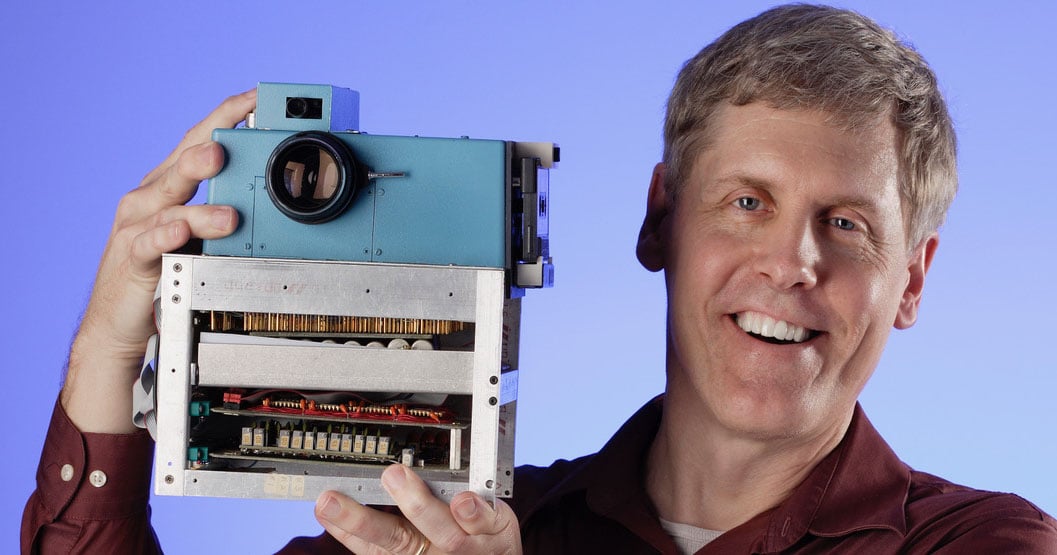
Kodak invented the digital camera in 1975. They saw what was coming before anyone else. What finished them was the weight of an organization built to protect film margins: leaders promoted for optimizing existing revenue, systems designed to defend what already worked, decisions made in favor of the machine that was already running. When the window came, they couldn't move through it.
Strategic patience requires the opposite. You have to know what you're watching for, have a clear threshold for when to move, and have leadership prepared to act when it arrives. Slow because you're waiting is a strategy. Slow because that's how the organization works is just slow.
What This Means for Startups
The startup mythology is built on the pioneer. Move fast. Get there first. Plant the flag before anyone else knows the territory exists. It makes for a good story. It also describes almost none of the most successful companies in recent history.
Facebook wasn't first. Friendster launched in 2002, MySpace in 2003. By the time Facebook opened beyond Harvard, the social network category had been proven, the early UX mistakes had been made, and the ceiling of what those platforms couldn't do was visible to anyone paying attention. Google wasn't first. AltaVista, Yahoo, and Lycos had search. Slack entered a market HipChat had already opened. Stripe launched into a payments ecosystem PayPal and Braintree had spent years building. Instagram arrived months after Hipstamatic had already proven that people wanted filtered phone photography.
These weren't flukes or fortunate timing. In every case, the winning product was built by a team that could see exactly what the first mover had gotten wrong and built directly to that. The pioneer funded the market research. The second mover read it.
The first mover pays the market education tax. The startup second mover inherits a market that already believes.

AI Accelerates the Second-Mover Playbook
Facebook, Google, Slack, and Stripe executed their second-mover strategies with the tools available at the time. They watched carefully, moved deliberately, and built products targeted at exactly what the pioneer got wrong. It worked. But it was slow, expensive, and required a level of patience and capital that limited who could pull it off.
AI has changed both constraints.
On the build side, the time required to catch up has collapsed. The 18-month head start a first mover earns through early development no longer buys the separation it used to. A focused team with the right tools can close that gap in months.
On the intelligence side, the shift is more fundamental. The historical second movers still had to ship something, watch it land, and learn from real users what they'd gotten right and wrong. Today's startup second mover can know what to build before writing a line of code. The first mover's user feedback is public and AI can synthesize it in an afternoon. You're not guessing at the job the market wants done. You already know. The competitive intelligence that once required 18 months in market now happens before you start.
What AI has done is take a playbook that required patience, capital, and time, and made it executable for any team willing to pay attention before they build.
Where First-Mover Still Wins
There is one condition that changes the math: when the first mover locks up distribution before a second mover can compete.
WhatsApp has 2 billion users. The product works because everyone you want to message is already on it. A second mover can build something with better features, better privacy, better design. They cannot build something that already has your contacts in it. eBay built enough sellers that buyers could find anything, which drew more buyers, which drew more sellers. The peer-to-peer auction network has never been beaten despite Amazon, Facebook Marketplace, and dozens of others trying. The distribution was the moat.
In both cases, the pioneer didn't just ship a product. They built the conditions that made the product work, and made those conditions nearly impossible to recreate from scratch.
This is the real distinction. Not network effects or marketplace dynamics as abstract categories, but whether the first mover made distribution structurally inaccessible. Where they did, being second is a losing position. Where they didn't, the market is still open, and the team that builds the right product wins regardless of who got there first.
In most markets, the pioneer hasn't closed that door. They've just walked through it first.

The Question Has Changed
In 1996, researchers Gerard Tellis and Peter Golder studied 66 product categories and found that market pioneers failed 47 percent of the time. The companies that came to dominate those categories were rarely the ones who arrived first. They were the ones who figured out what the first mover got wrong.
That was 30 years ago. The evidence has been there all along, but, the mythology hasn't caught up.
Being first only matters in categories where the pioneer can lock up distribution before anyone else arrives. In most markets, that never happens. The pioneer gets there first and pays for privilege and the trial-and-error. The second mover watches, learns, and enters with a product built around what the pioneer got wrong.
AI has accelerated everything in this calculus. Catching up now takes months, not years. The intelligence available to a second mover is sharper. The cost of entering a proven market is lower than it has ever been.
For corporates: distribution, customer relationships, and capital are exactly what a second mover needs to execute. That's only valuable if leadership knows what it's watching for and is ready to move when the signal arrives.
For startups: being second is not a concession. For most of the companies that defined the last two decades of technology, it was the plan.
Innovation doctrine still glorifies the pioneer. The evidence, increasingly, does not.
How did this edition land for you?


