
What You’ll Find This Week
HELLO {{ FNAME | INNOVATOR }}!
I recently came across an interesting study on the effects of population on innovation capabilities. Bluet et al. describe the advantages that larger populations bring to innovation opportunities, but they also reveal that there is a point of diminishing returns.
That begs the question: if we view a company as a “population,” how does the size of the company impact innovation capability. Logically speaking, we might expect that a larger population (and therefore a larger company) increases the opportunities for innovation to occur. Which is true. But only to a point.
This week, I’m diving into the research alongside real-world examples of where headcount does and does not amplify innovation, and what the missing secret sauce is to ensure growth.
Here’s what you’ll find:
This Week’s Article: Headcount vs. Culture: Which Predicts Innovation Capability
The Headcount Test
Don’t Miss Our Latest Podcast
This Week’s Article
Headcount vs. Culture: Which Better Predicts Innovation Capability?
If innovation were a headcount game, the biggest companies would win by default.
More people should mean more ideas. More experiments. More shots on goal. That logic shows up in public company language all the time. P&G makes the case more clearly, saying it combines “the heart of a start-up” with “the resources of a global corporation” as it looks for ways to reinvent the business.
With the heart of a start-up and the resources of a global corporation, we are always looking for ways to reinvent every aspect of our business.
Amazon makes a similar argument in a more thoughtful way. Size can support faster invention when the company builds the right internal primitives for teams to move on.
Primitives, done well, rapidly accelerate builders’ ability to innovate.
That belief isn’t wrong. It’s just incomplete.
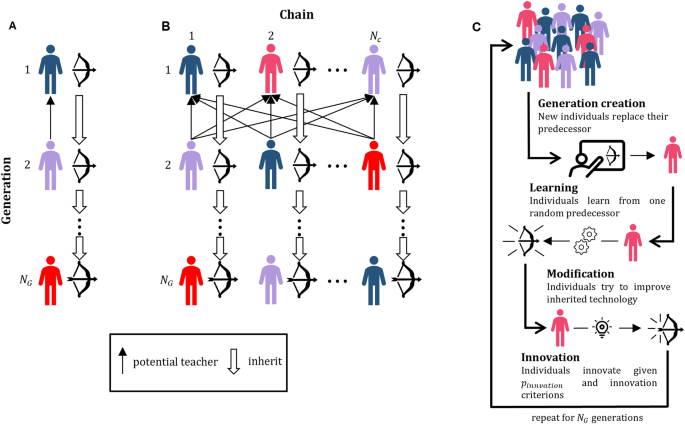
Research from Bluet et al. on population size and innovation points in the same direction. Bigger populations create more innovation opportunities, but the payoff doesn’t keep rising in a straight line. The gains flatten as populations get larger.
Population size exhibits an influence on cumulative technological culture, principally in small-scale populations.
The paper also finds that when innovation opportunities are already frequent, adding more people matters less. And it points to effective population size, structure, and connectivity as crucial parts of the story. In plain English, population helps. But it has far less explanatory power than leaders think it does.
Why Headcount Feels Like the Obvious Answer
The appeal is easy to understand.
Large companies have more money, more specialists, more customer access, more data, and more operating leverage. On paper, they should have an innovation edge. They can fund more teams. They can place more bets. They can afford longer timelines. They can absorb more misses. That’s the promise behind the scale story, and it’s why executives keep telling it.
Bluet et al. support part of that logic. Larger populations in the model do produce more total innovations, and they create more total opportunities to innovate. But the quality of the resulting technology rises in a logarithmic-like way, not a linear one. The authors call the relationship non-linear and describe it as diminishing returns. Bigger groups innovate more, yet they don’t get proportionally better outcomes.
Because once you move from theory to business, the question at hand isn’t, “How many people do we have?” The better question is, “How many of those people can actually behave like innovators here?”
That’s where Bluet et al. becomes useful for leaders. Headcount tells you how many people sit inside the system. Culture tells you how many of those people can actually challenge assumptions, test new ideas, move learning across boundaries, and scale what works. Headcount expands the surface area for innovation. Culture determines whether that surface area turns into innovation capability. That’s why culture is the better predictor.
What the Research Gets Right for Business
Bluet et al. aren’t writing a business paper, so the analogy has limits. But one part maps cleanly.
The authors argue that population size isn’t the sole explanation for cumulative technological culture. They say the way innovation arises, spreads, and recurs has a bigger impact than headcount alone. One of the key variables is what Bluet et al. call the asocial innovation rate, which is basically the rate at which individuals generate new ideas or improvements on their own rather than picking them up from others. That matters because once a system is already producing enough original innovation, adding more people doesn’t change much.
The effect of population size is constrained by the asocial innovation rate.
They also point to a related idea that matters a lot in companies: headcount alone tells you very little if only a small share of employees can actually generate, share, and scale new ideas.
That sounds a lot like corporate innovation.
A company can have 50,000 employees and still have a tiny effective innovation population if most people aren’t positioned to start an experiment, get access to budget, move across silos, survive a miss, or turn a local win into a scaled behavior. In that case, headcount is mostly administrative mass. The org is large. The innovation population is small.
What matters is whether culture turns size into usable innovation capacity.
Culture Is the Variable That Changes the Math
Culture gets treated like soft stuff because people use it loosely. In practice, culture is brutally concrete. It shows up in what gets rewarded, what gets funded, what gets challenged, what gets protected, and how fast a team can go from assumption to evidence.
A company with a strong culture of innovation does a few very specific things. It gives people permission to test. It lowers the social cost of being wrong. It moves learning faster than politics. It makes evidence more important than rank. It lets useful ideas travel. It helps teams build on each other instead of starting from zero every time.
That’s the business version of what Bluet et al. are saying. Population size can increase potential innovation. Culture determines whether that potential gets used.

Intuit Shows What This Looks Like When It Works
Intuit is a large company by any normal standard. In its fiscal 2024 annual report, Intuit says it serves about 100 million customers and generated $16.3 billion in revenue.
Intuit has spent years making innovation operational. Its Design for Delight approach treats rapid experimentation as a repeatable method, not a side project. Intuit’s own material says Design for Delight is “our secret sauce for how we innovate at Intuit” and that teams “quickly test the best solutions.”
We connect directly with our customers to gain empathy... and then quickly test the best solutions.
Intuit does that at scale. Teams are expected to turn assumptions into evidence. That’s what makes the example useful here. The company isn’t relying on headcount alone. It has built a system that makes experimentation part of how the organization works.
Amazon Shows How Scale Becomes Usable
Amazon reveals what large-company innovation looks like when the system is built to support it.
In Amazon’s 2023 shareholder letter, Andy Jassy makes the point more directly. His point is that Amazon can move fast at scale when it builds “primitives,” reusable internal building blocks that let teams invent without recreating the foundation each time.
The best way we know how to do this is by building primitive services.
Amazon’s version of culture is operational, not symbolic. Builders get reusable pieces that let them move faster. That’s what makes scale useful. The company isn’t relying on size alone. It’s giving people the tools and structure to do more with it.
John Deere Makes the Point in a More Traditional Market
It’s a big, established company operating in a traditional sector, and it’s still producing meaningful innovation. Deere’s 2024 Business Impact Report ties future investment to machine connectivity and John Deere Operations Center. The company also points to technologies like See & Spray and ExactShot as part of the value it is building into the system.
Operations Center™... is designed to improve productivity, efficiency, and decision-making.
That’s how scale becomes more than size. Deere is building a system that helps innovation spread across products, data, and customer workflows.

The Headcount Test
Five questions that reveal whether headcount is actually increasing your innovation capacity.
Do Ideas Move Across the Company?
A large company can have great people and still waste them if learning stays trapped inside functions, business units, or innovation theater teams.
Does Adding People Create More Experiments?
If the number of experiments doesn’t rise with the number of employees, headcount isn’t increasing innovation capacity. It’s increasing coordination cost.
Do Teams Get Rewarded for Proving Something New?
Culture becomes real when evidence beats certainty. If career safety depends on protecting the core, people will optimize the existing system instead of building a new one.
Do Successful Experiments Spread Across the Company?
One team learning something useful isn’t enough. Innovation capability shows up when the organization can spread useful behavior faster than it spreads caution.
Does Scale Make Learning Faster, or Slower?
That may be the cleanest test of all. If more size leads to slower learning, then size isn’t acting like an innovation advantage.
None of these questions are about mood. They’re about operating reality. They show whether culture is strong enough to turn headcount into innovation capability.
What Actually Predicts Innovation Capability
Headcount tells you how many people are in the company. Culture tells you how many of them can actually move innovation forward.
That’s why culture is the better predictor of innovation capability. A company can add people without adding experiments, learning, or adoption. It can also turn scale into a real advantage when the culture supports speed, evidence, and the spread of useful ideas.
For leaders, that shifts the question. Not how big is the organization. How many people inside it are actually positioned to build, test, and scale something new?
How did this edition land for you?


