
What You’ll Find This Week
HELLO {{ FNAME | INNOVATOR }}!
Two of the largest private capital firms on earth are in a bidding war over a European budget airline, and almost nobody's actually running the numbers on what's being fought over. This week, I ran them: easyJet's fleet, its Holidays business, and what you're actually paying for once you back the planes out of the price. Here's why I'd take Apollo's offer.
Here’s what you’ll find:
This Week’s Article: Let’s Buy easyJet
Don’t Miss Our Latest Podcast
This Week’s Article

Let’s Buy easyJet
easyJet spent thirty years disrupting European aviation by stripping out everything the flag carriers treated as non-negotiable. Sell the cheapest seat on the plane and make money on volume instead of complexity. But that disruption expired years ago, somewhere around the time Ryanair, Wizz Air, and a half-dozen smaller carriers finished copying the playbook. Cheap, unbundled, point-to-point flying is just how European short-haul works now.
Yet, in spite of that long-dead disruptive strategy, easyJet's board just agreed to a takeover by Castlelake, a US private equity firm built on aircraft leasing, at £6.90 a share, valuing the company at £5.5 billion (about $7.4 billion). Then, four days later, Apollo, one of the largest alternative asset managers in the world, came in with a higher offer: £7.15 a share, valuing the company at £5.7 billion (about $7.6 billion). That roughly 3.6% more per share difference convinced easyJet's board to drop Castlelake, calling Apollo's offer a "superior outcome" for shareholders. Shares jumped 15% to their highest level since early 2022 (though they're still trading around £6.75, about 5.6% below Apollo's £7.15 offer).
Castlelake has until August 3 to decide whether it's still in the fight. Apollo has until August 7. Neither offer is final, and EU regulators haven't weighed in yet.
What two of the largest private equity firms on earth are actually fighting over is what's left once you subtract easyJet’s disruption: an aircraft fleet worth almost as much as the entire company, built up over thirty years, and a packaged-holiday business. easyJet spent the last seven years building Holidays specifically because flying people stopped being enough. And they did it on the heels of Ryanair’s failed attempt at the same business.
Cheap seats made easyJet famous. Airplanes and Holidays make it worth £5.7 billion.
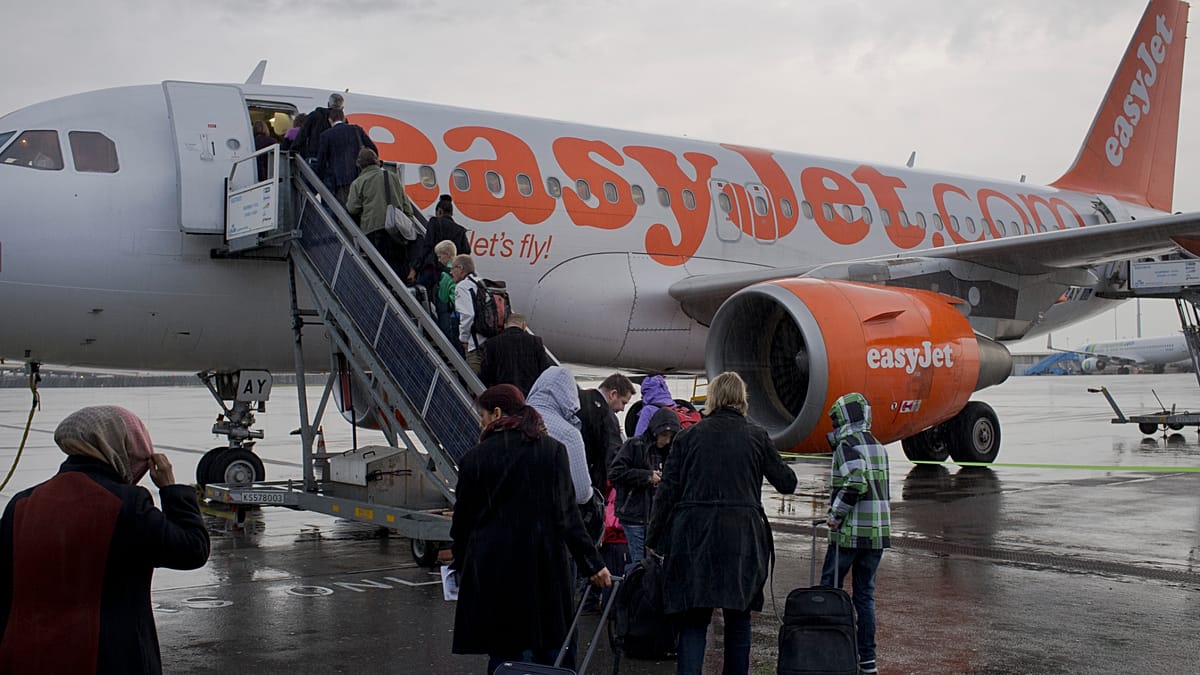
The Metal Sets the Price Floor
easyJet owns more than 200 of its planes outright, plus an orderbook of roughly 180 more Airbus A320 and A321neos on the way. Aviation analytics firm IBA puts the fleet's current half-life market value at about $6.6 billion, roughly 90% of what Castlelake was willing to pay for the entire $7.4 billion company.
Makes sense when you consider Castlelake "primarily an aircraft leasing firm, not a traditional private equity company." They make money moving planes between airlines. Bernstein’s prediction for the future of easyJet: a breakup, the fleet sold off, airport slots and Holidays parceled out to Europe's network carriers, the orderbook scattered to airlines outside Europe. Castlelake's whole bid was built around that number: a fleet worth 90% of the price, whether or not the airline attached to it is any good.

The One Thing Nobody Could Copy
Ryanair Holidays launched in December 2016, part of Michael O'Leary's plan to turn Ryanair into the "Amazon of travel." It closed in January 2019, after just two years. Ryanair "doesn't do complexity," a travel-industry analyst said at the time, and packaging a flight with a hotel and a transfer, at scale, with customer service to match, turned out to be exactly the complexity Ryanair had spent thirty years stripping out of everything else it did. Wizz Air is only now trying its own version Wizz Holidays, an AI-booking platform with no track record and no numbers attached yet, launched a week ago.
easyJet built its version starting in 2019, the same year Ryanair's died. And they put a former TUI (one of the largest travel and tourism companies in the world) executive in charge instead of running it like an airline. It worked. Last year Holidays brought in just £1.44 billion of easyJet’s £10.11 billion in revenue, about 14% of the total. But Holidays turned that 14% into £250 million in pretax profit, 38% of the whole company's £658 million.
The same pattern held in the toughest stretch of the year. In the six months to March 2026, the seasonally brutal winter half every airline dreads, the flying business lost £581 million. Holidays turned a £61 million profit in the same window, grew its customer base 22%, and kept the group's half-year loss from landing worse than £552 million. When the core business bled, the side business is what kept the company standing. A Holidays business that actually turned a profit, the one thing its rivals couldn't build, is part of why there's a premium on the price at all.
What You'd Actually Be Buying
Here's what you'd actually be buying at Apollo's price. Back out the fleet's $6.6 billion appraised value from the $7.6 billion bid, and you're paying about $1 billion for everything else: easyJet's brand, its airport slots, its route network, its customer relationships, and a Holidays business that alone made roughly $330 million in pretax profit last year. That's the whole rest of the company, including a genuinely profitable second business, for something like three times one year of Holidays' earnings.
Castlelake priced this deal like the flying business and Holidays were both disposable, worth selling off piece by piece to whoever wanted them most. The numbers don't support that read. Holidays grew its customer base 22% and turned a profit in the same six months the flying business lost £581 million. It kept the whole company standing during the worst stretch of the year, priced by Castlelake like an afterthought.
The fleet alone covers most of what you're paying, so the downside is close to fully collateralized. Everything above that, the brand, the routes, and a resilient, growing, already-profitable travel business, is coming along for a fraction of what it's worth. Apollo saw that on July 10, when it topped Castlelake's bid. Castlelake still has until August 3 to decide if it sees it too.
Verdict: BUY IT

How did this edition land for you?


