

What You’ll Find This Week
HELLO {{ FNAME | INNOVATOR }}!
Fifty-six years ago, a Japanese roboticist sketched a graph explaining why almost-human things feel wrong. This week, I found that graph playing out in three places at once: a TikTok feed where nearly six in ten videos served to new viewers are AI slop, a workplace survey where two-thirds of knowledge workers say they're nostalgic for pre-AI work and keep using the tools anyway, and a legal citation tracker that just passed 1,200 fake cases across US and Canadian courts.
This week: why the gap in that graph is closing fast, why the standard for "good enough" is dropping even faster, and what that trade is actually costing the people who assumed someone else already checked.
Here’s what you’ll find:
This Week’s Article: The Uncanny Valley Has Gotten Worse, Not Better
Don’t Miss Our Latest Podcast
This Week’s Article
The Uncanny Valley Has Gotten Worse, Not Better
In 1970, an editor at Energy, a magazine published by the Japanese arm of Standard Oil, asked a robotics researcher named Masahiro Mori to contribute to a special issue on robots and human thought. Mori wrote a short essay. He sketched a simple graph: as a robot gets more humanlike, our affinity for it rises, until it gets almost human and affinity collapses into revulsion. He called the dip bukimi no tani, the uncanny valley.

Redrawn from Mori's original graph. The dashed line is his curve for still objects; the solid line is for moving ones, which he found people judge more intensely in both directions, friendlier at the peaks and harsher in the dip. Both curves fall hardest right around the point where something looks almost, but not quite, human.
Redrawn from Mori's original graph. The dashed line is his curve for still objects; the solid line is for moving ones, which he found people judge more intensely in both directions, friendlier at the peaks and harsher in the dip. Both curves fall hardest right around the point where something looks almost, but not quite, human.
Mori was writing about prosthetic hands, specifically the eerie feeling people got looking at ones that were realistic but not quite right, decades before deepfakes, chatbots, or AI-generated video existed. The term sat in Japanese engineering circles for eight years before Jasia Reichardt's 1978 book Robots: Fact, Fiction, and Prediction carried it into English. It took decades more before Karl MacDorman and Norri Kageki produced the first full authorized translation of Mori's original essay, published by IEEE Spectrum.
Fifty-six years is a long time for a graph sketched almost as an aside to still be the best available description of how we feel about synthetic things. We haven't climbed out of that valley. If anything, we've spent the last few years walking further into it, along a route Mori never sketched.
Shinwakan
Mori's graph measures shinwakan, roughly "affinity" or "sense of connection," the reaction that fires before anyone's run a test to prove anything is fake. That reaction lives at the individual level, one person, one moment, one gut response to one thing in front of them. A study can't measure it in aggregate. A person feels it or doesn't.
Formal detection is a different question, and it's improved unevenly. Machines now beat humans at spotting deepfake images. Humans still beat machines at spotting deepfake video. Useful to know, and separate from what Mori was measuring. A detector tells you whether something is fake. It doesn't tell you whether it felt wrong to the person looking at it, and those two answers can diverge in either direction. Something can pass every technical check and still feel unmistakably off. Something can get flagged immediately and still feel completely fine.
People scrolling a feed or reading a company blog post are reacting to something they usually can't even name, with no detector running in their head at all.

Nearly
AI-generated writing, images, voices, and video have gotten nearly indistinguishable from human output. Type a prompt and out comes a paragraph, a face, a song that can pass in a scroll, a scan, a half-second glance. Ten years ago, producing any one of those took a research lab. Now it takes a phone and a few seconds.
Mori's graph offers two ways for that gap to resolve. The output keeps improving until the difference actually disappears, and affinity recovers the way it does for his healthy person at the far right of the curve. Or the difference holds, and so does the discomfort, the valley behaving exactly the way Mori's graph predicted.
The distance between nearly and actually hasn't closed. But the discomfort hasn't held either, at least not at the volume you'd expect given how much of what people now see, hear, and read is synthetic. A third option opened up that Mori's graph has no line for…
Instead of closing the gap or sitting uncomfortably at its edge, we're adjusting to it by lowering what counts as close enough.

TikTok's Welcome Mat Is AI Slop
A study published this week manually reviewed 10,742 TikTok videos across 20 categories, then built a fresh account with no viewing history and tracked the first 500 videos its "For You" feed served up. A brand-new account sees TikTok's baseline feed, the version the platform defaults to before its algorithm has learned anything about a viewer, weighted toward already-popular content plus location and language.
Fifty-nine percent of what that baseline feed served was AI-generated, low-quality content, what researchers are calling AI slop. For videos aimed at kids, it's 57.4%. New TikTok users see roughly three times more of it than new YouTube users do. Ninety-seven percent of #CartoonKids videos in the study were AI slop.
According to the researchers, filling new accounts with that much AI content "acclimatizes users to the aesthetic and thematic norms of TikTok culture." None of it needs to pass as human-made to get watched. It just needs to autoplay into the next one.

1,200 Fake Citations and Counting
In courtrooms, unchecked AI slop in the form of hallucinated case law has become problematic enough to warrant fines for practitioners who can’t be bothered to fact-check their own materials. A tracker run by researcher Damien Charlotin has documented more than 1,200 of these cases, roughly 800 of them in US courts, with as many as 10 turning up in 10 different courts on a single day. A federal court in Oregon sanctioned one lawyer $109,700 for it earlier this year, and Charlotin says the rate of new cases keeps climbing, not falling.
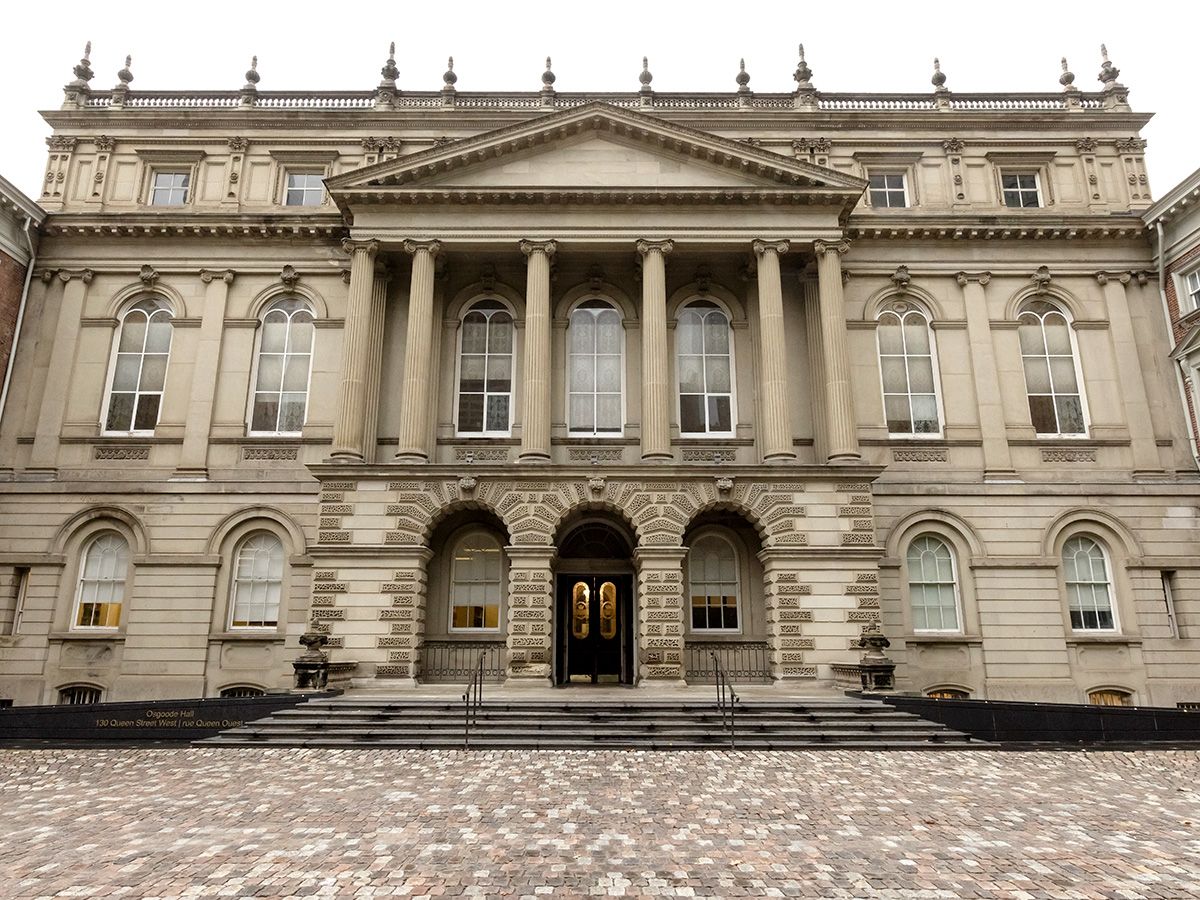
Canadian courts are handing out the same kind of penalty. In June, a Law Society of Ontario tribunal hit lawyer Shahryar Mazaheri with $31,150 in costs after he filed motions built on AI-generated citations that didn't exist. The tribunal found his "irresponsible use of artificial intelligence" had "wasted time, cost, and effort" and was "profoundly improper," the largest AI-related costs order any Canadian court or tribunal has issued so far. A year earlier, a Toronto family lawyer's factum cited cases that turned out not to exist; the judge dropped the contempt proceeding after she admitted the error, apologized, corrected the factum, and agreed not to bill her client for the work, but not before noting that AI is "ubiquitous and yet its risks and weaknesses are not yet universally understood."
Every one of these lawyers, in every one of these courts, has had the same warning available: this mistake keeps getting sanctioned on both sides of the border, and it keeps happening anyway.
Asked why, Charlotin put it in one sentence: "We have this issue because AI is just too good, but not perfect." The tools are good enough that checking feels unnecessary. They're not good enough for that to be safe. Lawyers keep choosing not to check, and the fake citations keep landing in front of real judges anyway.
Getting Worse, Not Better
Mori's graph plots affinity against how human something looks, and the uncanny valley is the dip where that affinity collapses into revulsion. The distance between nearly human and actually human hasn't closed. What has changed is how much verification humans still require before we accept something anyway.
A TikTok feed, a knowledge worker's output, a legal citation: in each case, the gap between what's nearly right and what's actually right stayed exactly where Mori would have drawn it. Getting accepted anyway just took nobody checking whether it had closed.
Whatever's still wrong keeps landing in front of a judge, a boss, or the next person scrolling, because nobody was required to catch it first.
So as good as AI is becoming, humanity is becoming worse for it.
How did this edition land for you?


