
What You’ll Find This Week
HELLO {{ FNAME | INNOVATOR }}!
The standard explanation for why enterprise AI adoption keeps failing is that people resist change. They're threatened. They don't understand the tools. They need more training, more mandates, more accountability.
I've heard that story more times than I can count. And I've watched organizations run the same playbook every time: announce the tool, schedule the training, track the logins. Same outcome six months later.
What most companies never stop to ask is whether they built the friction themselves. Whether the path between a person and actually using the tool is hard enough that the old way wins. Every day. Until the initiative quietly fades.
This week I'm using Domino's Pizza to explain why. Specifically what they pulled off between 2011 and 2018, and why the question they spent a decade asking is the one most companies never get to about AI: what's actually standing between the person and using this?
Here’s what you’ll find:
This Week’s Article: You Have A 🍕 Problem
Don’t Miss Our Latest Podcast
This Week’s Article

You Have A 🍕Problem
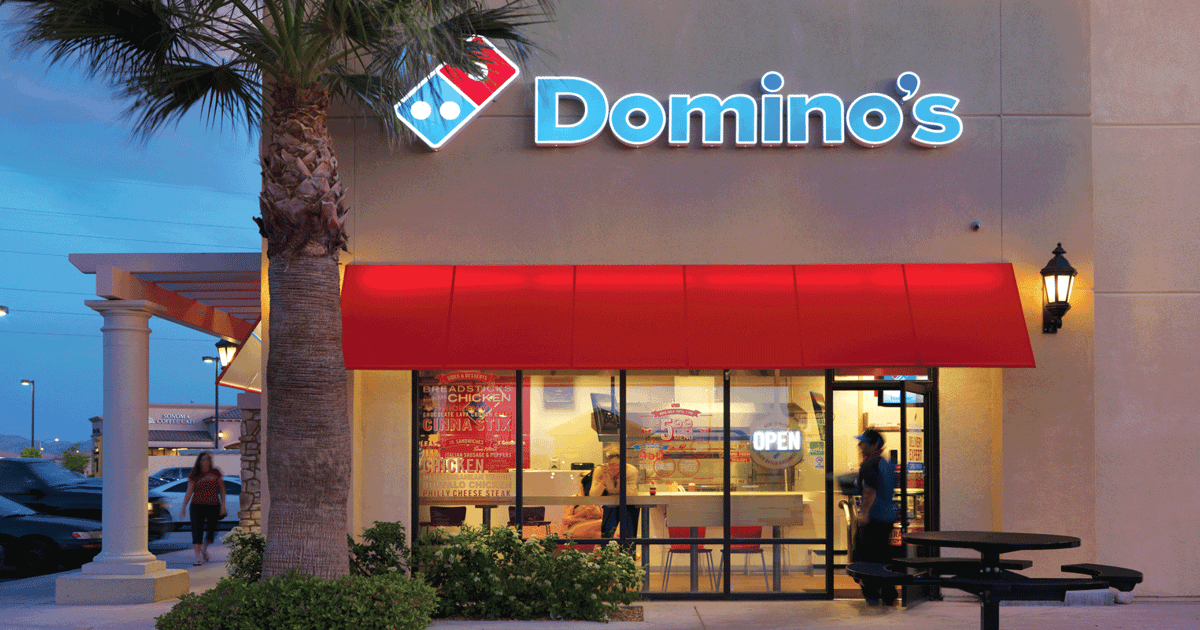
In 2008, Domino's Pizza stock hit $2.83 per share. The chain ranked last in taste among major pizza competitors. Not second to last. Last.
The obvious play was a better pizza. Patrick Doyle, who took over as CEO in 2010, eventually did that too. His approach: run a campaign that broadcast the company's own bad reviews on national television. Focus groups called the sauce "totally void of flavor" and the crust cardboard. Doyle put those quotes in the ads and told customers he wanted to do better. First-quarter same-store sales jumped 14.3% in 2010. People came back.
Customer data told them something counterintuitive: when hunger hit, quality mattered less than speed and ease of access. A better pizza wasn't going to close the gap on its own.
So they went after friction.
The AnyWare Obsession
In 2011, Domino's set a specific goal: move from just over 20% digital orders to 50% by 2015. To get there, the company stopped asking customers to come to a website. They brought ordering to wherever customers already were.
The result was Domino's AnyWare, launched in May 2015. Samsung Smart TV. Ford SYNC dashboard. Pebble smartwatch. Amazon Echo. And the channel that stopped people mid-scroll: Twitter, by sending a pizza emoji.

Here's how it worked. You linked your Twitter handle to your Domino's Pizza Profile and saved an Easy Order, which bundled your usual food, preferred payment method, and delivery address. Then you tweeted 🍕 or #EasyOrder to @Dominos. An automated DM came back with your order summary. You confirmed. Done. The whole exchange took about a minute. No app. No cart. No checkout flow.
Domino's seeded the launch with cryptic all-emoji tweets before anyone knew what was coming. The campaign won the Cannes Lions Titanium Grand Prix, the award for the year's most breakthrough creative idea. Two billion earned media impressions followed. Jimmy Fallon, Ellen, the Today Show. None of those were paid.

Normally, good friction removal is invisible. You just reorder. Domino's designed the emoji channel to be the opposite of invisible: tweeting a pizza emoji and getting a pizza was inherently shareable, and people shared it. Two billion impressions came free because customers wanted to tell someone what they'd just done.
Every other channel in the AnyWare suite asked the same question: what's standing between a customer and an order right now, and can we remove it? Samsung refrigerator: someone standing in the kitchen doesn't have to find their phone. Ford SYNC dashboard: someone already behind the wheel doesn't have to decide where to stop.
During the Q3 2015 national TV campaign for AnyWare, same-store sales grew 10.5% year over year.
By 2018, more than 60% of Domino's US orders came through digital channels. The stock crossed $300, a gain of more than 13,000% from the 2008 low.
Domino’s is a technology company disguised as a marketing company disguised as a pizza company.
Domino's found a way to make ordering pizza a party trick. Tweet an emoji. Tap your smartwatch. Pull it up on your Ford's dashboard. The stock went from $3 to $300 because ordering a pizza from your car’s dashboard is something you'd want to talk about.
Why This Is Harder Than It Sounds
The argument that moved Domino's wasn’t easy to make internally. "Our ordering process is the problem" runs directly into defensiveness. Products have owners. Friction points usually don't. Improving the pizza gives R&D something to point to. Removing friction across fourteen ordering channels requires coordination across teams that don't naturally talk, investment in infrastructure that never appears on a features list, and leadership willing to measure success by what customers never consciously notice.
The value lives entirely in what doesn't happen: the abandoned cart, the app someone decided not to download, the moment someone thought "there's probably something in the fridge." You're asking the organization to fund an absence, at scale.
This same problem shows up everywhere you try to establish any new behavior in an organization. New product launches. Internal process changes. Technology rollouts. The history of corporate transformation is full of things that were theoretically sound and practically ignored. A new CRM that 60% of the sales team routes around. A collaboration platform that never replaced email. An operating model redesign that lasted two quarters. The ideas were sound. The friction between "this exists" and "this is how I work" was never treated as a design problem.
The pattern tends to look the same regardless of context. Something gets built, deployed, and mandated. Training sessions get scheduled. And six months later, a small group of early adopters uses it well, the majority has a login but avoids it when possible, and everyone else is quietly waiting for the initiative to fade. Nobody built that outcome on purpose. They just forgot to ask the question Domino's spent a decade asking: what's actually standing between the person and using this?

The Current Version
Right now, the most visible place this is failing is enterprise AI. 79% of organizations are struggling with adoption, 54% of C-suite executives say AI is tearing their companies apart, and 75% admit their AI strategy is "more for show" than actual guidance. (via WRITER 2026 Enterprise AI Adoption Survey)
The standard response is more mandates, more training, more accountability. The assumption underneath is that the problem is individual: employees who resist change, don't understand the tools, or feel threatened by what they might mean for their jobs. That's sometimes true. There are real concerns about what AI means for work, and those concerns aren't going away on their own. But companies are piling institutional friction on top of individual ambivalence, and that combination is what makes adoption fail.
Companies aren't blocking AI. They're surrounding it with restrictions that make using it harder than not using it. You can use the tool, but only through an approved portal. Only for tasks that don't touch proprietary data. Only after completing a certification program. Only for pre-approved use cases. Only for 20% of what the tool can actually do, with every interaction logged for review.
Here's what that looks like in practice. A contractor onboards at an F500 company and gets Claude access. No agentic features are exposed. No files that contain company information can be uploaded. No code execution, no task automation, no connection to internal systems. What they can do is use it like a slightly smarter search engine, the tool stripped of the capabilities that make it useful, wrapped in surveillance, available for the least valuable portion of its possible applications.
The technology shows up. The mandate follows. Usage numbers look acceptable. Business outcomes don't. When the post-mortem comes, the conclusion is usually that the tool underdelivered.
The tool was fine. The friction was left in.
What It Takes
Two things determine whether any of this pays off.
The first: map the friction before you deploy, not after. This means asking, specifically, what a real person has to do differently on a real day to use the new thing. Not in the demo. Not in the onboarding session. In their actual workflow, with their actual workload, on a Tuesday afternoon when they're trying to finish something. If the new path has more steps than the old one, stop. The friction is still there, and you still have time to remove it before you deploy.
The second: treat friction removal as ongoing work, not a launch activity. Most adoption efforts peak at rollout and stop. Domino's didn't add channels once and declare victory. They kept asking the same question across new surfaces and new years. That question has to stay live, with someone whose job is to keep asking it.
The organizations that come out of this period ahead will have treated friction removal as the actual project. Not the reporting structure around it. Not the certification program. The removal.
If it ain't easy, it won't get done. Domino's built a 13,000% stock return on that insight. Most organizations right now are running the same experiment with the friction left in, and wondering why the results look different.
How did this edition land for you?


