

What You’ll Find This Week
HELLO {{ FNAME | INNOVATOR }}!
In August 2007, Chris Messina pitched a way to sort tweets by topic: put a pound sign in front of a word. Twitter told him it was nerdy and would never catch on. They were wrong.
Two years later, Twitter added hashtag search.
Your users will make your product theirs whether you like it or not. This week: how iPhone owners broke into their phones to install apps Apple wouldn't allow, why Notion and Make hand users the building blocks from day one, and what happened to Twitter's outside developers after Elon Musk bought the company.
Don’t Miss Our Latest Podcast
This Week’s Article
Your Product Is Either a Toaster or a LEGO
On August 23, 2007, Chris Messina suggested that Twitter users put a pound sign in front of a word to group tweets about the same topic. According to CNBC, Twitter told him the idea was "nerdy" and would never catch on. People used it anyway, and in 2009 Twitter added hashtag search.
Twitter's users came up with the retweet too. In April 2007, a user named Eric Rice reposted someone else's tweet, which Quartz describes as the first retweet as far as anyone can tell, and Twitter began rolling out an official retweet button in November 2009. Outside developers built on Twitter from the start. Twitterrific, an app from a small software company called the Iconfactory, was the first Twitter app to support @replies and the first to use a bird icon. A lot of what people remember about Twitter came from people who didn't work there.
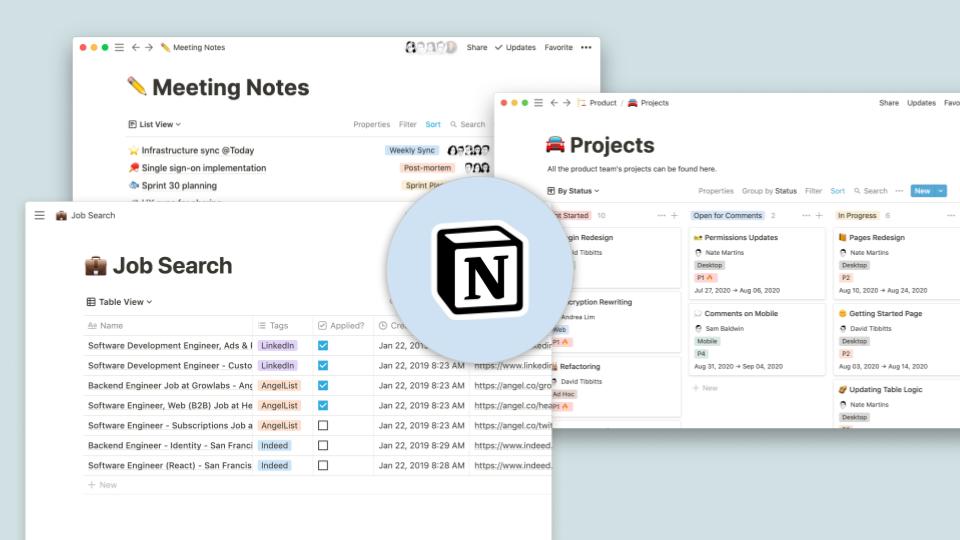
Ivan Zhao, Notion's cofounder, has a name for the kind of software most companies build instead. "Most software these days are like toasters," he told Ness Labs in 2021. "They do one thing well." Notion went the other way. "We wanted to build a set of LEGO-style software blocks," Zhao said, "that would let anyone in the world build their own tools to solve any problem they have."
Users will make your product theirs whether you like it or not. The people who build it only get to decide whether it's built to let them.
Users Change What They Adopt
In Diffusion of Innovations, Everett Rogers calls what Twitter's users did re-invention, "the degree to which an innovation is changed or modified by a user in the process of its adoption and implementation." Until about the 1970s, researchers who studied how new ideas spread treated adopters as passive. When someone in a survey described changing a new idea, Rogers writes, that change "was treated as 'noise' in diffusion research." Once researchers started counting those changes, they found a lot of them.
In a national survey of schools adopting new educational programs, Rogers reports, 56% used only some parts of the program they adopted, and 20% made important changes to it. Of 104 adoptions of new programs by California mental health agencies, 55 involved re-invention and 49 didn't.
Eric von Hippel at MIT found the same thing in products. His book Democratizing Innovation, which is free to read, collects eight surveys of users ranging from German surgeons to mountain bikers to webmasters running Apache servers. In each group, between about 10% and nearly 40% of users had built or modified a product for their own use.
Some users keep changing a product after the company tells them to stop. On a recent episode of my podcast, Adam Link, who spent years at Coinbase and now runs Fireweed Capital, a financial planning firm, described a marketing platform he pays for that has no public API. He had Claude watch the calls the platform's own interface sends to its servers, mapped the private API underneath, and built his own tool on top of it. The vendor's support team told him he isn't allowed to do that. Adam's answer is that he'll use far more of their product this way.
Every group in these studies changed what it adopted, with or without the maker's help.

Apple Kept the iPhone Closed
The first iPhone couldn't run apps from anyone but Apple, and Steve Jobs wanted it that way. "We define everything that is on the phone," he told the New York Times when he unveiled it in January 2007. "You don't want your phone to be like a PC." At Apple's developer conference that June, he told developers who wanted to build for the iPhone to make web apps that ran in Safari, the phone's browser, and called web apps "a very sweet solution."
Hackers didn't wait. Within two months of launch, they had broken through the phone's restrictions, a practice that became known as jailbreaking. By late August 2007, a free tool called AppTapp put an Installer app on the home screen that, according to Engadget, gave owners access to "nearly every third party application" released so far. None of those apps were approved by Apple. That fall, the hackers behind one jailbreak tool, AppSnapp, said it had been downloaded more than 140,000 times, which Telecoms.com worked out to at least 10% of the 1.4 million iPhones Apple had sold. In February 2008, a developer named Jay Freeman, known online as saurik, launched Cydia, an unofficial catalog of apps for jailbroken phones, and the scene kept going even after Apple opened its own store. Macworld wrote in December 2008 that "the jailbreaking community lives on."
According to Walter Isaacson's biography, Jobs at first shut down talk of outside apps, partly because he didn't think his team had the bandwidth to deal with "all the complexities that would be involved in policing third-party app developers." Apple board member Art Levinson called Jobs "half a dozen times to lobby for the potential of the apps." On October 17, 2007, Jobs wrote that Apple planned to have a kit for building native apps "in developers' hands in February." By then, owners had been installing outside apps for nearly two months. Three days after the App Store opened in July 2008, it offered more than 800 apps, and users had downloaded more than 10 million of them. "The App Store is a grand slam," Jobs said.
In August I wrote about why Clayton Christensen predicted the iPhone would fail, and I'd argue that opening the phone to other people's work a year after launch is a big part of why it didn't.
Notion and Make Leave the Building to Users
Notion ships pages, databases and embeds, and leaves the rest to the people using them. "If Notion can help anyone build their own tools to solve their problems," Zhao told Ness Labs, "then we will have done our jobs."
Make, an automation platform, connects more than 3,000 apps and leaves it to users to decide what connects to what. When a new Spanish regulation required food-sector businesses to register contracts digitally, Docuten, a Spanish business software company, built its clients' registration system out of eight Make workflows, three of them dedicated to handling errors. By Make's account, that cut development time from eight or nine weeks to four and saved more than 300 hours. Make's engineers never had to build a contract registration system, because Docuten's team built one on top of Make.
Rogers found that innovations people can re-invent spread faster and last longer. In his words, "A higher degree of re-invention leads to a faster rate of adoption of an innovation," and "a higher degree of re-invention leads to a higher degree of sustainability of an innovation." He defines sustainability as "the degree to which an innovation continues to be used over time after a diffusion program ends," meaning whether people keep using something once nobody is pushing them to.
His clearest example comes from medicine. At Léon Bérard, a French cancer center, doctors helped write their own treatment guidelines in 1993 and 1994. By 1995, the share of breast cancer patients treated according to those guidelines had risen from 19% to 54%, and the share of colon cancer patients from 50% to 70%. Rogers calls those changes "rather phenomenal," because most studies of treatment guidelines have found they barely change what doctors do. His explanation is that the doctors helped write the guidelines, so the guidelines presumably fit their situation.
Products like Notion and Make let every user fit the product to their own situation from the first day, which is the condition Rogers ties to faster adoption.

Decide What Users Can't Change
Rogers calls the parts of an innovation that make it work its core elements, "the features that are responsible for its effectiveness." His example is the no-smoking ordinance. Every city's ordinance "prevented smoking cigarettes in public places," and "each city's no-smoking ordinance differed in important ways," from bans covering one or two kinds of public place to bans reaching fifty feet past a building's door. Cities changed almost everything about the law except the part that kept smoke out of public places.
Jobs had to find the same part in the iPhone. In his October 2007 letter, he wrote that Apple was "trying to do two diametrically opposed things at once": opening the phone to outside developers while protecting owners from "viruses, malware, privacy attacks, etc." His team kept that protection fixed and opened the rest. Developers decide what their apps do, and Apple's reviewers decide whether an app gets into the App Store, where, in Apple's own words, "every app is reviewed by experts."
The people building a product have to name that part before they open it up, because it's what lets users change everything else without breaking what makes the product work.
Twitter Banned Third-Party Apps
Twitter's staff adopted the hashtag and the retweet that users came up with, and for years they tolerated outside apps built on Twitter's API, while narrowing the room those apps had. In August 2012, Twitter capped third-party client apps at 100,000 users each, with apps already past that number allowed to double it, according to Engadget.
Elon Musk completed his purchase of the company on October 27, 2022. Eleven weeks later, around January 12, 2023, popular third-party apps stopped loading new tweets. Twitter's developer account posted that "Twitter is enforcing its long-standing API rules." On January 19, Twitter changed its developer terms to bar developers from using its API to "create or attempt to create a substitute or similar service or product to the Twitter Applications," according to PCWorld. Twitterrific, the app that first put a bird on Twitter, was discontinued. Its first code had been written in December 2006, sixteen years earlier.
Twitter's staff built the hashtag and the retweet into the product after users invented both. In 2023, under Musk, Twitter's management treated its own apps as the one part of Twitter that outside developers couldn't touch, and cut off Twitterrific, which had been building on Twitter since before either feature existed.
Somebody is already doing something with your product that you didn't design. Find out what it is, and build for it.
How did this edition land for you?


