

What You’ll Find This Week
HELLO {{ FNAME | INNOVATOR }}!
Global venture funding hit $510 billion in the first half of 2026, and OpenAI and Anthropic alone took $217 billion of it, 43% of everything raised worldwide. Most of the coverage stops there. A smaller number is more interesting: Nvidia put $23.7 billion into 59 AI companies in 2025, and a lot of those companies turned around and spent it on Nvidia chips. A Wall Street analyst who covers Nvidia already has a word for that arrangement: "murky."
This week: the same murky arrangement shows up in Amazon, Google, and Microsoft's stakes in OpenAI and Anthropic too, what it's doing to seed valuations everywhere else in the market, and what it means if the company on your cap table is also your biggest customer.
Here’s what you’ll find:
This Week’s Article: The $217 Billion Purchase Order
Don’t Miss Our Latest Podcast
This Week’s Article
The $217 Billion Purchase Order
"Fewer companies are getting funded, but those that are securing cash are raising much larger rounds. The market is bifurcating."
I wrote that in November 2025, off one quarter of Crunchbase data. That quarter, an 18-company mega-round club already accounted for a third of all venture investment, with OpenAI's $40 billion round alone worth a fifth of it.
Nearly a year later, the round sizes are still growing. Global venture funding hit $510 billion in the first half of 2026 alone, more than the entire $440 billion raised in all of 2025. OpenAI and Anthropic together pulled in $217 billion of that, 43% of everything raised globally, by two companies.
November's numbers were about round size. Bigger checks, fewer companies getting them. Round size doesn't explain where that money goes after it lands. A meaningful share of it flows straight back to whoever wrote the check. Nvidia gets chip orders, a hyperscaler gets cloud contracts.
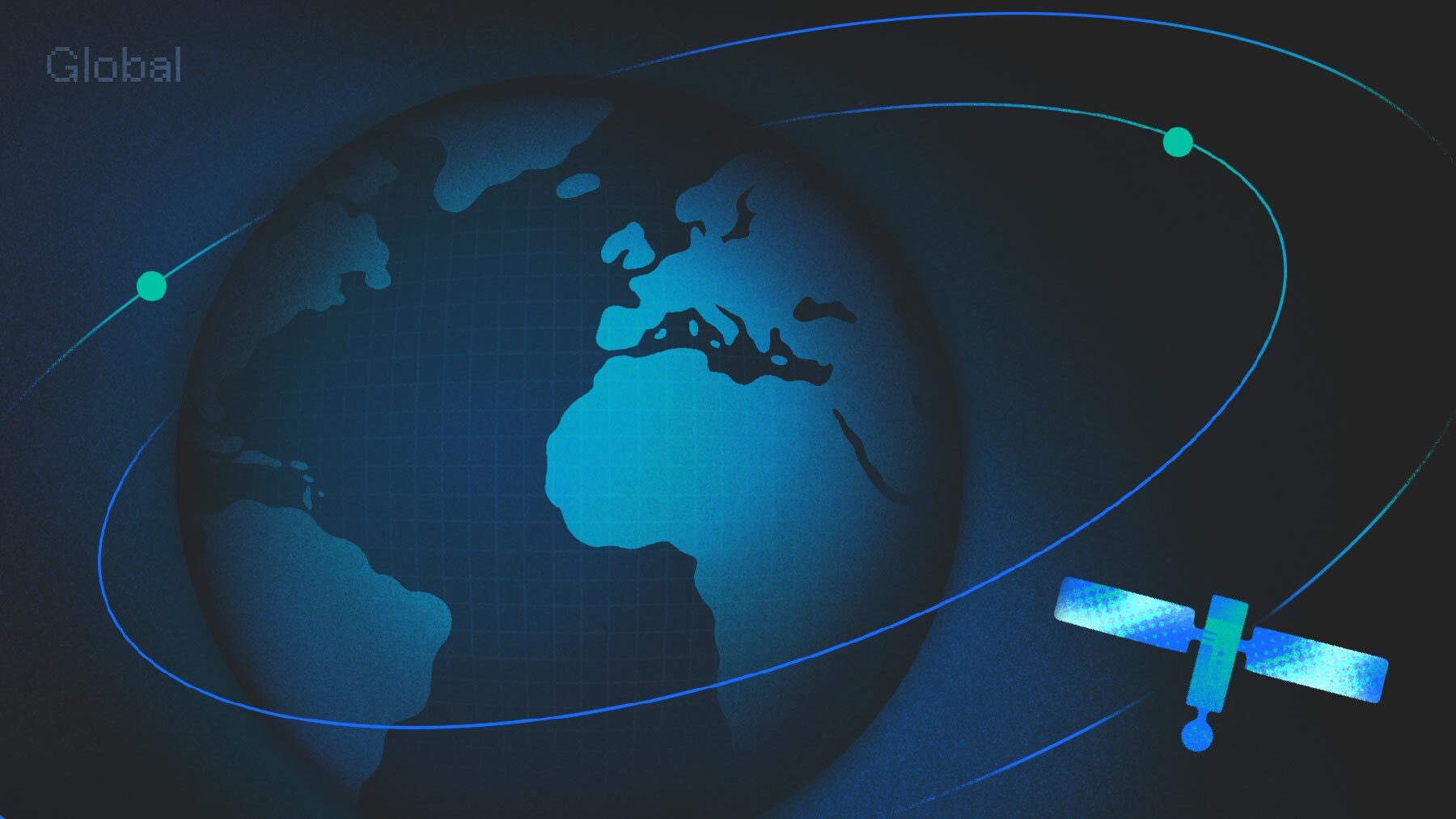
Nvidia's Checks Come Back As Revenue
Nvidia put $23.7 billion into 59 AI companies in 2025 alone. Many of those companies spend part of that money on Nvidia chips, the thing Nvidia actually sells. Nvidia gets two things out of one check: a stake in the company if it succeeds, and chip revenue whether it succeeds or not.
Seaport analyst Jay Goldberg, one of the few analysts with a Sell rating on Nvidia, called the arrangement "very murky," asking, "To what degree is Nvidia investing versus buying demand or subsidizing demand for its chips?" Nvidia's $100 billion commitment to OpenAI came with OpenAI agreeing to buy at least 10 gigawatts of Nvidia's compute systems, the same structure at a much larger scale.
Not every analyst reads it that way. Bernstein's Stacy Rasgon called it "no better use of Nvidia's cash right now." Jensen Huang has defended the strategy as ordinary venture investing in future trillion-dollar companies. Both sides agree on what Nvidia is doing. They disagree on whether it's a problem.
Three Other Buyers Run The Same Play
Amazon and Google run the clearest versions of this. Amazon is investing $5 billion in Anthropic (on top of $8 billion already committed), and Anthropic is leasing up to 5 gigawatts of AWS capacity as part of a pledge to spend more than $100 billion on AWS over the next decade, running on AWS's own Trainium chips. Google's version is larger. Google is investing $10 billion in Anthropic now, with up to $30 billion more if Anthropic hits performance targets, at a $350 billion valuation. Separately, Anthropic has committed to spend roughly $200 billion on Google's cloud and TPU chips over the next five years, more than 40% of Google Cloud's entire revenue backlog. Google gets the same two things Nvidia does: equity upside if Anthropic succeeds, and cloud and chip revenue whether it does or not. Microsoft's version got more complicated in April 2026, when Azure lost its exclusive hosting rights and OpenAI became free to run on any cloud. Microsoft kept a "primary partner" clause that puts OpenAI's products on Azure first, an IP license through 2032, and roughly 27% equity. The exclusivity is gone. The preference isn't.
Enterprise software firms like Salesforce and Cisco are after something similar at a smaller scale: an AI startup's technology embedded in what they already sell, so their own customers don't have to go anywhere else for it. A frontier lab funding a smaller AI company gets a customer as part of the same deal. The smaller company builds on the lab's models and pays for API access, revenue the lab would otherwise need a sales team to go find.
None of these four is spreading money across dozens of bets and hoping one returns the fund the way a venture fund does. Each is buying a specific outcome it can point to: a customer, a distribution deal, a cloud contract, a foothold inside a product millions of people already use. PitchBook's July report puts a number on how much of the market that describes. Corporate investors account for a record 87.9% of US AI VC deal value in 2026, the majority of every dollar moving through the category.
I've covered a version of this before. Microsoft, Google, and Amazon ran reverse-acquihire deals on Inflection, Character.AI, Adept, and Windsurf, paying to absorb people and technology without the deal registering as a normal acquisition. The mechanism there was different. The instinct behind it wasn't: big tech using its capital structure to get what it wants while the deal avoids looking like a normal acquisition or purchase.
Calling any of these four checks a "funding round" simply names the paperwork. What's underneath the paperwork is a pattern unfolding in realtime that is confounding analysts, and 87.9% of a $510 billion market now runs on some version of the same arrangement.

Where Traditional VC Went
None of this stays contained to mega-rounds. The median seed post-money valuation hit an all-time high of $24 million in the fourth quarter of 2025, up from $18 million a year earlier. Carta's own analysis: "these figures span all sectors of the startup economy."
A seed fund's price ceiling works as a selection test. A fund that won't pay above a certain price makes sure only the companies it has real conviction in clear that bar, because overpaying breaks the math on returning the whole fund from one exit. A corporate buyer runs different math. If Nvidia or a hyperscaler decides a company is worth overpaying for because it locks in a customer or a supply chain, the price it pays reflects the value of that lock-in to the buyer. It says nothing about whether the company will actually succeed. Once a buyer like that sits in a round, other investors can no longer tell what a high valuation means. It might mean real conviction that the company will succeed. Or it might mean a strategic buyer wanted the lock-in badly enough to pay for it, with no view on whether the company succeeds at all. Every seed fund is now competing against buyers running that second kind of math. The median seed valuation jumped 33% in a single year, from $18 million to $24 million, and buyers who don't care about fund returns are a real part of why.
None of this is illegal, and none of these four buyer types are doing anything a strategic investor hasn't always been allowed to do. Corporate venture arms have paid premiums for lock-in for decades. What's different now is how much of the market runs on it. 87.9% of US AI VC deal value in 2026, per PitchBook, instead of a niche minority of rounds. A dynamic that used to be one bidder among many in a handful of deals is now close to the default price-setter across an entire asset class, and a seed fund, a founder, or a later-stage investor pricing a company today has to account for that shift whether or not any regulator ever decides to intervene.

Term Sheet As Supply Contract
Our previous articles, WTF is up with Fundraising in 2025? and its follow-up, How to Survive the 2025 Funding Bloodbath, were survival guides for a brutal fundraising market in November 2025: get customers before capital, extend your runway, take the money that gets you through even without a marquee logo attached. That advice still holds. But it isn't the whole picture anymore.
If a hyperscaler, an enterprise software company, Nvidia, or a frontier lab is writing your check, your deal comes with trade-offs that my previous advice didn't account for. Your top investor is also your top customer, which means their bad quarter is your bad quarter twice. You lose revenue and cap table support from the same source at the same time, instead of those risks sitting with different people. You lose leverage to negotiate hard on price, because pushing back on a bad deal risks the funding relationship, not just the contract. And later investors or an eventual acquirer may look at how much of your revenue came from the company that's also on your cap table and ask hard questions about it.
Telecom equipment makers financed their own customers' purchases the same way in 1999, and when those customers couldn't pay, the vendors who'd financed them took the loss. Lucent alone booked $2.2 billion in bad-debt charges in a single year. Today's version is structured differently, these are equity stakes and purchase commitments, not loans, so a funder like Nvidia doesn't face the same accounting cliff if a portfolio company fails. The concentration risk doesn't go away just because the cliff does: your funder and your customer are still the same company, and if that company's business slows, both halves of your relationship with it slow at once.
None of that means you should turn the money down. It means going in with eyes open: know how much of your revenue traces back to your own investor before you tell anyone your growth rate, and negotiate the commercial terms as hard as you'd negotiate with a stranger, because the person on the other side of the table has less reason than a stranger would to make sure the deal is fair to you.
How did this edition land for you?


